
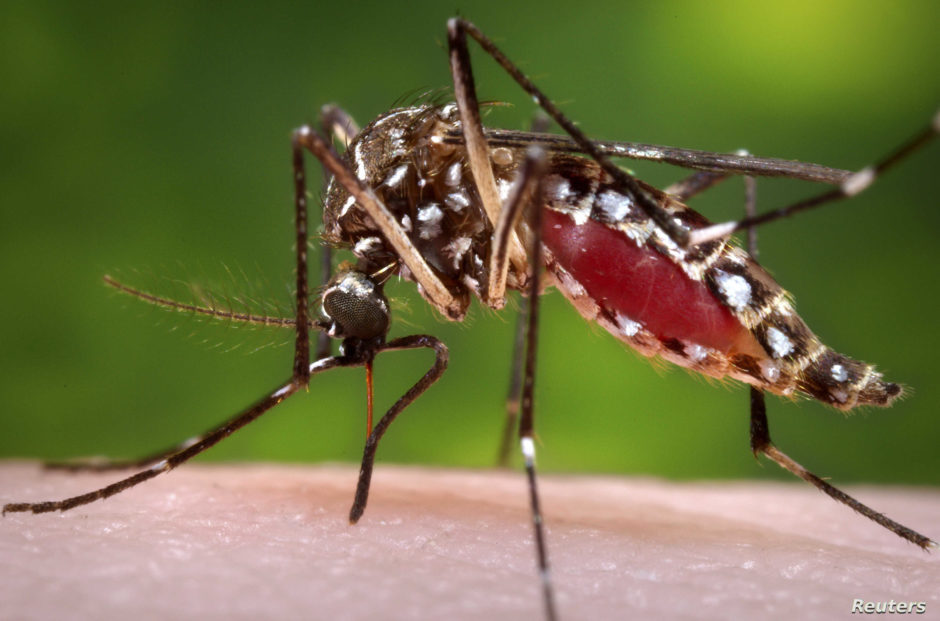
Malaria, Mozzies and Mzungu: Part 4
This is the 4th article in our series on malaria, if you want to read the others go on The Eye website and you will find the full or even expanded articles. We have covered the life cycle, the disease, the effect of immunity, and diagnosis. We asked the question, why is a Pakwatch schoolboy who is bitten 5 times a night completely well most of the time, yet a Mzungu bitten once on a weekend in Murchison is very ill in 10 days and without treatment dead in another week? More importantly, why are so many travelers told they have malaria even when they are taking prophylaxis and don’t even have a fever, or have only been in the country for 4 days?
We looked at the reality of malaria diagnosis, the difficulty of relying on a blood slide, and the results of some research highlighting the very real problem of overdiagnosis.
One about to be published article shows some research in Tanzania where in one area 98% of people diagnosed and treated for malaria did not have malaria. So how do you know if you have malaria and not another cause of fever, a virus, or meningitis, or a hangover?
If you are on holiday, away from home, or sitting worrying in your house at midnight with a hot cross 2 years old and desperate for a good night’s sleep, what do you do? Your friends confidently tell you the child has malaria, but you really don’t think so. Is the child going to go unconscious before morning? Is it safe to carry on our trip? Is it safe to be pregnant in Uganda, won’t malaria cause a miscarriage, and the treatment harm the baby?
Article 3 finished asking, “What is the answer?” Read On!
First common sense! Ask the 3 questions looked at in detail in the last article: where were you 10 days ago, am I taking prophylaxis, do the symptoms fit. Common sense can take you a long way in medicine!
The next best answer is the malaria rapid test. They have a sensitivity of finding malaria if there is 1 parasite in 25,000 cells. In theory, The Gold Standard lucky expert could find one parasite in 50,000 if he looked for long enough. However as the number increases by about 10 every 2 days, then the worst that can happen is that 2 days later there is 1 parasite in 2,500 cells. Not a big deal. You need to wait another 4 days, i.e. a total of 6 days, to get the potentially fatal 5% parasite, count. So a good malaria rapid test, repeated the next day if negative is going to find your malaria long before you get seriously sick. It will pick up as a faint positive while you still have a slight headache and a fever that you hardly know is there.
Magic
So what is the problem?
First. There are some very poor tests on the market. We found one that missed malaria even with one in 2,000 parasites. It will find them before the fatal amount, but still far too insensitive to be of any use in the field. We wrote to the importer requesting them to take it off the market. We cannot name it! But the following we can recommend. Becton Dickinson, ACT, and MR were made in Cape Town and distributed by The Surgery. Those are genuinely sensitive to one in 25,000.
Next problem. They go out of date. If in doubt trade it in for a new one.
Next. Too much heat ruins them. They may give a false positive, telling you that you have malaria when you don’t or miss it when you do. If it has been cooked, chuck it.
Next. The reagent evaporates. It does not happen if the top is screwed down properly! We have tried it, we kept them upside down for weeks and they do not leak if properly tight! If your bottle is empty, get it refilled. It is only buffered water, and we have liter bottles of it.
Next. They will miss vivax and p. malaria. It doesn’t matter, as neither can cause severe malaria, but can be a big nuisance. So if you get a 2-day or 3-day recurrent fever with a persistently negative rapid, think of other species. One good clue: urobilinogen in the urine. It makes it very dark even if you are drinking plenty. There are vivax rapid tests, even some that pick up all 3. They cost a bit more but if you live in a vivax area, i.e. a bit cooler, get the kit that tests for both.
Next. They stay positive for a very long time after cure. It picks up a protein called the F protein that is released by the parasites. It carries on circulating in the blood for weeks after the parasite is dead and gone; until it is removed by enzymes that cut it up and metabolize it. So in a semi-immune with a stimulated and efficient enzyme pathway, it goes negative in a few days after treatment. In a traveler, it takes up to 6 weeks. So a positive rapid 3 weeks after treatment does not mean you have another bout of malaria. It might! Or it might still be fading. All you can do is repeat the next day. If it is an even stronger positive that means you have new malaria. If it is fainter then it is the old one still showing positive.
However, this is not only a problem; it is also one of the good things about the rapid tests. It means we can tell if someone really did have malaria after treatment. So if someone has “malaria” and is treated and doesn’t get better, we can see if they really did have malaria or we need to look for another disease causing the symptoms. Every day we see people who have been treated for “malaria” with very unlikely symptoms. In about 9 out of 10 cases we find the rapid is negative.
Summary. Diagnosis of malaria is not as straightforward as you may think. The symptoms are not specific, very many different diseases can be wrongly diagnosed as malaria, and blood slides are easily misinterpreted.
If the diagnosis is missed for too long it can be fatal. However, treating every disease like malaria can also be fatal.
A really expert microscopist with new slides, clean stains, and a properly serviced microscope, with negatives, repeated a day later, is the best method of diagnosing malaria, as they can tell if it is falciparum vivax or p. malaria, how many parasites there are and if the number is close to being dangerous.
In practice in most places, the most reliable method is the do-it-yourself malaria rapid test. It can be done at home, on the road, or on holiday back in Europe. It can save a lot of lives as well as lots of hassle. It will pick up malaria at very low densities of 1 in 25,000, including the time when they are “sequestrated” in the deep organs and therefore not seen in a slide. They also need to repeat negatives in 24 hours. They will miss the other species unless it is a multi-species test, and give false positives for up to 6 weeks after treatment. They can also be spoilt; out of date and done wrongly, they are not the perfect answer.
The absolute best is both! A rapid and a slide. If in doubt, remember common sense. And the most important piece of health equipment you can have with you is your mobile phone. In the next eye, we look at treatment
Read More
Sole Luna Restaurant
For a city of only 1,000,000 people, Kigali has an impressive array of restaurants, accommodating to almost all tastes and budgets. Recently I and a group of friends met at one of these fine eating establishments, a Ristorante Italiano called Sole Luna, located on the main road between the Chez Lando intersection in Remera and the Parliament buildings (on your left if coming from Remera).
We arrived as an unreserved group of 11 and were quickly and graciously accommodated. The open-air, bistro-like atmosphere at the restaurant is very pleasing; with the centerpiece being the beautiful view of the rolling, lightly covered hills of Kigali. Sole Luna truly is a small piece of Italy in Rwanda, with the menu covering an extensive and affordable selection of pizzas, pastas, calzones and even boasts a selection of wine.
Although choosing a dish wasn’t an easy task we eventually placed our order and enjoyed drinks, the view, and the company while waiting for our meal. Despite the fact that the restaurant was very busy, with a group of nearly 20 there to celebrate a birthday, our food arrived in a reasonable amount of time, all at once, and piping hot. My group sampled many different meals, and all expressed their satisfaction with their choice.
I personally had one of Sole Luna’s pizzas, which to my delight was served on a thin crust with ample helping of brie cheese! Truly, a rare delight in Kigali. Although all the meals were enjoyed the conclusion of the group was that Sole Luna’s specialty is pizza, and with over 55 kinds to choose from even the most discriminatory eater should be able to make a selection. Be warned though, these pizzas are over 12 inches in size, so if you’re not ravenous you might be advised to share. On the other hand, it is possible to take the leftovers home and enjoy it the next day.
Of course, every rose has its torn and at Sole Luna, it would be its bathrooms, although clean the lack of toilet seat (in the girls, I can’t speak for the boys) leaves an unfortunate impression of an otherwise delightful restaurant. Despite the minor downside, I would still give Sole Luna two enthusiastic thumbs-up, and with its multi-level design, it is accommodating for both larger groups and a small intimate supper.
Read More
The Kinigi Guesthouse and Responsible Tourism
The four gorilla permits were booked, the bus tickets for Ruhengeri were purchased and all of our bags were packed. Two Canadians and two Rwandans were prepared and (very much) excited for our Rwandan gorilla trekking experience. All we needed was somewhere to rest our heads at night and fill our stomachs for the adventure to come.
We booked the Kinigi Guesthouse and it was an excellent choice.
The Kinigi Guesthouse is located within one minute from the ORTPN head office, about fifteen minutes away from Ruhengeri. This proximity makes the early departures from the office much easier. The premises are spacious and beautifully maintained with rows of colorful flowers and attractive buildings. The Virungas mountains rise sharply in the distance and provide a rather breathtaking morning view. We were treated to a beautiful sunrise over the Rwandan countryside on our first morning, which made waking up early much easier.
The guesthouse opened its doors to the public in July 2000 and has been operating ever since. However, this establishment is not an ordinary tourist lodge. Kinigi Guesthouse was founded as an income-generating project for the “Association de Solidarité des Femmes Rwandaises” (ASOFERWA a.s.b.l.), a non-profit association for the protection of vulnerable groups (mainly widows and orphans). The income earned through the guesthouse is used to pay school fees for local orphan children, purchase land for agricultural projects, support groups of widows, and provide local artists with the space to sell their creations. Local community members are employed within the guesthouse, while food and decorations are purchased locally. The whole concept behind the Kinigi Guesthouse is an investment in the local community.
There are numerous accommodation options at the Kinigi Guesthouse. One large building holds single rooms ($40.00 US), double rooms ($50.00 US), and the VIP room ($60.00 US). The rooms are spacious and equipped with hot showers, private bathrooms, and mosquito nets for the guests. The guesthouse offers guests four shared dormitories (each with four beds) at $10.00 US. Guests have access to shared bathrooms and hot showers in the building next door. Travelers looking for an outdoor experience may pitch their own tents for $6.00 US.
My friend and I chose to share a double room, while our Rwandan friends chose to stay in one of the dormitories. We all slept very well and would have been reluctant to leave our warm beds were it not for the gorilla adventure awaiting us.
Housed in the main building are the reception, lounge, and restaurant. A seminar room is also located on the premises for hosting events. In the evenings, we were invited to warm ourselves by a large fire in the lounge while we relaxed and chatted with other guests. Having worked up quite the appetite, we were treated to plentiful and delicious meals at the restaurant. The menu offers something for everyone, at reasonable prices. I treated myself one evening to a large steak topped with mushroom sauce, served with rice and an avocado salad.
The meal was exactly what I needed to recharge after an exhilarating day on the mountain. My friends decided on brochettes that night and were not disappointed. In the morning, breakfast includes omelets (plain, tomato, cheese, onion, or Spanish), toast with mixed jam, fresh fruit, and your choice of coffee, tea, or hot chocolate. The meal was delicious and provided us all with the energy we needed to conquer the mountain trek ahead.
The staff members at the Kinigi Guesthouse are perhaps its strongest selling point. From our arrival to our departure (two days later), we enjoyed friendly and responsive service. Arriving late at night after our long bus ride, it was a pleasure to be welcomed to the guesthouse. The receptionist not only responded to our questions about the guesthouse but was equally helpful as we arranged some final details for the gorilla trek. She arranged our transportation with a local driver which could have been very difficult otherwise. The restaurant staff were equally friendly, which made our meals even more enjoyable. Upon return from the gorilla trek, the staff eagerly inquired about our experience and shared our excitement.
While our stay was very enjoyable, the guesthouse requires minor renovations. There is water damage on several walls due to the combination of humidity and colder northern weather. However, this very month the guesthouse rooms will be renovated to repair the damage and prevent future problems. Future guests will be unlikely to experience any of these problems.
One must also remember that the guesthouse’s reason for existence (after guests, of course) is the community projects. These projects not only provide valuable assistance to vulnerable persons but also help share the income generated from international tourism. The gorillas have begun to draw large numbers of tourists to the country, and the Kinigi Guesthouse exists to ensure that this income is distributed to those most who need it the most.
Staying at the Kinigi Guesthouse is also an investment into the future of ASOFERWA projects. Talking with the guesthouse manager (Ms. Mukangenzi Beatrice), we learned that the future plans include an expansion of accommodation options, traditional dance shows, and local community tours for guests. These programs will not only increase the guesthouse’s revenue and provide income for numerous persons (construction workers, dancers, and tour guides) but will also increase ASOFERWA’s ability to implement beneficial projects.
The Kinigi Guesthouse has agreements with several tour operators, both nationally and around the Great Lakes Region. These will gladly book accommodation at the guesthouse. Any interested guests may also contact them at the address provided below.
Read More
Kigali International Community School Begins
With Kigali’s rapid development an increasing number of the international community and returning Diaspora have found Kigali to be a pleasant home in East-Central Africa. As their numbers increased some discovered the need to initiate an English-speaking international school. In October 2005, a few expatriate families in Kigali, Rwanda, joined together to discuss the possibility of creating an international school. From this discussion, the dream of Kigali International Community School (KICS) began.
The dream was to offer excellent education using an American curriculum and certified American teachers with a Christian philosophy. It was hoped that not only would the school be able to serve families already living in Kigali, but it would also help attract new expatriate families to provide aid, development, and investment to Rwanda. The founders of the school desired for KICS to be an inclusive school for people from many backgrounds and belief systems.
Kigali International Community School opened its doors on September 14, 2006, in a small home in the neighborhood of Kacyiru. It began with 25 students in 5 classrooms. Growth was the only option that KICS had.
During the April 2007 school holidays, KICS moved into its new location in the Caisse Sociale 2020 Vision Gaculiro Estate. The new location provided room for rapid growth with 25 classrooms, 10 offices, and access to Christ’s Church in Rwanda Hall across the street. The school sits in the middle of a 300 home estate created to model the hopes for Rwanda’s 2020 Vision. KICS began operating from its new location on 7 May 2007. At this point, the student enrollment almost doubled to 45 students.
KICS operates on a September to July school calendar similar to the American educational system. When the new school year began in September 2007 enrollment increased to 75 students from 20 nationalities. Approximately one-third of the student enrollment is in Rwanda.
The current mix of students provides a wonderful melting pot of languages, cultures, and backgrounds. The families at KICS represent those from Christian missions, Non-government organizations, embassies, and the business community. Many families have found KICS to be a safe place to land in Rwanda with a supportive community willing to thoroughly engage in Rwanda’s development.
KICS now is lead by Head Master Brian Dolinger. KICS has 6 full-time American teachers with the rest of the staff needs being filled by part-time expatriates and full-time teachers from Rwanda and Kenya. The school offers a lab with 20 computers and a large library. Elective courses are offered in art, music, and physical education. Extra-curricula activities include student government, drama, and football (soccer.)
In order to meet the needs of the international community in Kigali KICS enrolls students from Pre-School to Secondary. The school day begins at 8:00 and ends at 3:00.
KICS recently received registration from Rwanda’s Ministry of Education. Currently, it is pursuing accreditation from the Association of Christian Schools International and also Middle States Accrediting Agency in the United States.
For those desiring to view KICS the reception is open each day from 8:00 to 12:00 for tours. In order to find KICS drive on the Nyarutarama Road to the Gaculiro Estate. Turn onto Palmer Nord Road and KICS will be found in the middle of the Estate.
For further information contact the KICS Headmaster, Brian Dolinger at the following contacts:
Kigali International Community School
B.P. 6612
Kigali, Rwanda
Phone: + 250—03-053-057
E-mail: dolingerbc@yahoo.com
www.kicsrwanda.org
The role of science in Rwanda
Scientific questions are generally grouped into two categories (basic and applied) based on their purpose. Applied questions concentrate on solving a particular problem. Given the immense threats facing gorilla populations, much of DFGFI’s research is applied in nature and focuses on understanding the factors influencing the survival of gorillas and their habitats. Alternatively, basic questions are generally more theoretically driven and aimed at discovering new principles or testing theories. Basic science is sometimes described as science for the sake of science.
The majority of studies conducted at Karisoke in the 1970s and 1980s were very basic in nature and focused on the biology and ecology of the species—very necessary information as we had little such data on any wild gorilla populations. Although basic studies may not have problem-solving as their original aim, the knowledge gained from basic studies is essential for applied research to occur. For example, if a scientist is interested in how human use of the bamboo vegetation zone of the park affects gorilla populations, he/she would need to know the importance of bamboo to the gorilla diet, seasonal variation in the use of the bamboo by gorillas, regeneration patterns of bamboo–all information gained through basic studies of gorilla and bamboo ecology.
Science is a crucial part of DFGFI’s mission. Since the time of Dian Fossey, a major focus of the studies at Karisoke has been furthering our understanding of the basic biology of gorillas. Through the incredible work of the Karisoke team and a number of researchers, the scientific community has gained tremendous insights into many aspects of mountain gorilla life—for example, social and reproductive behavior, diet and feeding behavior, habitat use, infant development, vocal communication, and life history decisions.
With the 40th anniversary of Karisoke (September 2007), some might ask if research on mountain gorillas is still really needed. Surely we must have answered all the important questions by now. In actuality, we still have a considerable amount to learn about the biology of one of our closest relatives and how to ensure their long-term survival in the wild. For example, a question that is regularly asked is “How many mountain gorillas can live in the Virungas?” The answer to this question is obviously very important to the future of mountain gorillas. To accurately answer it, we need a considerable amount of scientific information on various aspects of gorilla biology, including dietary preferences and needs, habitat use, infant survivorship, adult mortality, lifespan, and female lifetime reproductive success.
After 40 years of observation, we are just now able to provide much of this information. For example, we now have observed several individuals from birth to death and thus have accurate idea of the lifespan of a gorilla. Similarly, we have observed several females throughout their reproductive careers and can begin to assess expected lifetime reproductive success (e.g. how many surviving offspring a female can produce). Thus, just to answer what would appear to be a relatively simple question about the carrying capacity of the region requires an enormously long period of study.
In addition, behavior is not static, particularly in highly intelligent and flexible species like gorillas. Gorillas continually adjust their behavior to changes in their ecological or social environments. As a result, there is no final point at which we can say we truly understand gorillas. They will continue teaching us as long as we continue watching.
Finally, there is no other gorilla research site in the world that matches Karisoke’s ability to collect detailed behavioral data on a large number of individuals. Although behavioral data on western lowland gorillas are now becoming more available, these data represent a much shorter time period and are generally more limited in scope. For example, many sites are unable to follow individuals from day to day as we do at Karisoke. As a result, the continued study of the Karisoke groups is really imperative to the advancement of our scientific understanding of gorillas and, more generally, apes.
So what does science look like at DFGFI? In many ways, it has not changed substantially since the days of Dian Fossey. Each day, teams of DFGFI staff head into the forest to gather data on the behavior, health, and ranging patterns of the three research groups. Just as in Dian’s time, these data are primarily collected in waterproof notebooks using knife-sharpened pencils. But not everything has stayed the same. Specifically, technology enables us to look at much more than gorilla behavior. Urine and fecal samples are collected for hormonal assessment and to determine paternity. Global Positioning System (GPS) units allow us to obtain much more detailed data on gorilla ranging patterns. An additional difference is who collects the data. Whereas data in the 1970s and 1980s were generally collected by expatriate graduate students and scientists studying at Karisoke, the vast majority of data are now collected by young Rwandan scientists who work full-time for DFGFI. This focus on training Rwandans is part of our commitment to ensure that love, knowledge, and ownership of gorillas are shared within the country in which we work.
Finally, our scientific program has greatly expanded since the time of Dian Fossey. Studies at Karisoke encompass much more of the biodiversity in the Virunga region including birds, plants, and other mammals such as golden monkeys and ungulates. Some examples of studies that are currently ongoing in the field include:
maternal behavior and infant development,
male social behavior, reproductive strategies and life history decisions, the impact of tourism and researchers on gorilla behavior, paternity determination, and behavioral development of twins.
Another significant part of our science program takes place outside of the field and involves the use of Karisoke’s long-term databases. With almost 40 years of data on behavior, ranging patterns, and demographic events (e.g. births, deaths, transfers), it represents one of the longest continuous studies of any animal in the world. In the past two years, through a collaboration led by Martha and Andrew Robbins of the Max Planck Institute for Evolutionary Anthropology, the long-term records have been used to write papers on:
female dominance rank,
female reproductive success,
maternal investment and female transfer decisions.
Although much less glamorous than work in the field (‘data collection’ primarily involves extracting the needed information from notebook after notebook of records and to digitize data), such studies are critical to our understanding of gorilla behavior and discovering trends that might not be apparent in shorter-term studies. For example, studies in the 1970s and 1980s reported female gorillas do not show evidence of dominance hierarchies. However, when we looked at behavioral observations over 30 years (1971-2001), stable female dominance relationships were apparent, with some females remaining at or near the top of their hierarchies for at least 15-25 years. All in all, the science of gorilla biology is alive and well at Karisoke.
Stay tuned and visit our website for more information
www.gorillafund.org

Kigali City – Business District
Kigali City is the Capital City of Rwanda, situated almost in the Centre of the country. Its geographical position is Latitude 1°57’S and on longitude 30°04’E. Kigali is located in a natural region called Bwanacyambwe within the proximity of the Nyabarongo river basin, between Mt.Kigali(1852m high) and Mt.Jali.The city is built on interlocking hills, which progressively converge and are separated from each other by large valleys giving them oval shapes. Originally the city occupied the hills of Nyarugenge and Nyamirambo which covered an area of about 200hactares at the time of independence but has since expanded to cover Kiyovu, Gikondo, Kicukiro, Kacyiru, Kimihurura, Remera Kicukiro, Nyarutarama, etc. While on your visit to Kigali for a conference or business trip you need a few our to get the real feel and taste of Rwanda the Land of a thousand places, These are the suggested places that you can go to visit and unwind.
Richard Kandt’s House/Museum of Natural History
Dr.Richard Kandt was a medical doctor by profession; he was also a soldier, an explorer, a scholar, a poet, and an avid naturalist. He was born of a Jewish Kantorowicz family of Posen in 1867. After attaining a degree in medicine in 1894, completing his military service and a stint as a physician assistant, he embarked on an exploration of Africa. His inspiration was to solve the puzzle of the source of the Nile thus Rwanda became his destination naturally. With an inherited personal fortune of 80,000Marks, he arrived at the East African Coast in 1897 and organized an expedition of 150 members.
In June 1898 he stayed at the court of the King of Rwanda from where he finally discovered the source of the Nile in Rwanda in August 1898. Later he settled at Shangi on the shores of Lake Kivu from where he thoroughly discovered Rwanda.
In 1902, he returned to Germany. In 1904, he published his book “Caput Nile-a a sensitive Journey to the Source of the River Nile”. It was reprinted in 1991.
In 1905 he returned to Rwanda to continue with his research. By 1906 he had identified a site in Gakinjiro on Nyarugenge hill as his residence. A year later, it doubled as his headquarters when he was appointed the first colonial Resident Governor of Rwanda in 1907 a position he held up to May 1916 when the Belgium troops occupied Kigali bringing an end to the 22 years of Germany colonial rule.
In 1908, he named his headquarters Kigali; after the nearby Mt.Kigali.It was officially gazetted on 19th October 1908. Richard’s task as Governor was to develop Rwanda into a modern state. In this regard, he identified and introduced coffee as a cash crop and identified and identified the Irish Potatoes as food crops to meet the subsistence needs of the local population. He also embarked on the development of infrastructures. It should be remembered that during his tenure the colonial office had approved a railway line for Rwanda. The line has not been constructed yet.
In 1914, Richard Kandt left Rwanda never to return. While on a vacation in Germany, the First World War broke out and he volunteered his services as a surgeon to the Bavarian Army. In 1918, he died in Nuremberg as a consequence of gas poisoning at the frontline. His grave is in Johannisfriedhof Graveyard in Nuremberg(grave N°478)
Places of Worship
European missionaries, notably the White Fathers, introduced Christianity to Rwanda in the late 19th century. A 2001 study indicates that about 94% of the population is Christians: 50% Catholic and 44% Protestant. Muslims account for about 5% of the total population and about 2% professed no religion at all.
The Roman Catholic Archdiocese of Kigali (Latin: Archidioecesis Kigaliensis) is an ecclesiastical territory of the Roman Catholic Church in Rwanda. It was erected from the Archidiocese of kayi by Pope Paul the IV on April 10 1976 with the dioceses of Butare, Byumba, Cyangugu, Gikongoro, Kibungo, Nyundo, Ruhengeri.
The mother church of the archdiocese and thus seat of His eminence the Archbishop is St. Michael’s Cathedral the oldest in the Country.
Nyamirambo Muslim Quarters
Islam was first introduced into Rwanda by Muslim traders from the East Coast of Africa in the 18th century. Since its introduction, Muslims have been a minority in the territory
The word Nyamirambo is derived from the Kinyarwanda word,’ Imirambo’ to mean dead bodies. This is the point where the Banyoro and Banyarwanda had a fierce battle during the post-colonial era. The Banyoro had intentions of capturing and expanding their territory to Rwanda.
Camp Kigali (Venue of the massacre of Belgian Blue Beret at the onset of Genocide). The 10 Belgian in MINUAR under the command of General Romeo Dallaire were deployed to guard the Arusha Accord transitional Prime Minister Uwilingimana Agatha.At the onset of Genocide, the Ex. Far soldiers invaded the home of Uwilingiyimana Agatha and disarmed the Belgian soldiers (10) and transported them to Camp Kigali and Killed them from there.
KIST
This was a former Military Training School at this site. There is a small house just next to the administrative block which in the late 50s was ‘Ecole des Officiers’ where the Habyalimana was. In it was expanded through the Belegian Military Cooperation and became ‘Ecole Superior’militarie. This has been transformed into the leading National University for science and technology to strengthen the education status in the country and help Rwanda cope with fast-developing technology in the world.
Kigali Independent University – This is the first privately run University in Rwanda that has Changed the trend of Higher education in Rwanda. The setup of the campus and resources available to the people of Rwanda and foreigners is amazing.
The Parliament – Shell marks are still visible on the walls of the Parliament Building because of the power struggle during the 1994 genocide era.
The Legislative Power is exercised by a bicameral Parliament which consists of the Chamber of Deputies (members are called Deputies) and the Senate (members are called Senators). After the October 2003 parliamentary elections, women achieved 48.8% representation, the largest in the world.
The Parliament of Rwanda was established by the Constitution of June 4th, 2003. It is the first democratic Parliament since national independence in 1962 that includes seven political parties (the RPF, PDC, PDI, PL, PSD, PSR, and UDPR). The previous transitional parliament (1994-2003) set up immediately after the 1994 genocide. It was governed by the then fundamental law mainly based on the 1993 Arusha Peace Agreement.
National Bank of Rwanda – (Banque Nationale du Rwanda) is the central bank of Rwanda. The bank was founded in 1964 and is quartered in Kigali. The National Bank of Rwanda has undergone a transformation since 1911. Rwanda, which was kept apart from the Leopoldville center of influence, noticed once again that the installation of various common institutions in Bujumbura would harm its economic development. The four years of the economic and monetary union were just a failure, each party feeling cheated and blaming each deficiency on the other party. The divorce between Rwanda and Burundi became a reality when the economic union was liquidated from 1st January 1964.
The National Bank of Rwanda, established by the Law of 24th April 1964, came into force from 19th May 1964 with the aim of fulfilling one of its main missions, namely the issuing of currency on the Rwandan territory. The B.E.R.B. rights and obligations were ex officio transmitted to the Royal Bank of Burundi (B.R.B.) and to the National Bank of Rwanda (B.N.R.).
Rwanda National Television and Radio (ORINFOR)
ORINFOR was established in 1973 to operate the electronic mass media national radio and Television. Today almost 500 employees work through the coordination of ORINFOR to secure access to a broad and diverse spectrum of information relevant to all religious and other groups making up today’s society of Rwanda.
ORINFOR serves as an umbrella for the three main national news- and media organizations including TV- and Radio Rwanda
Seat of the Radio Television Libre de Milles Collines (RTLM)
The antennae of the infamous hate Radio which was instrumental in mobilizing Hutus to Kill the Tutsi. The Radio was sponsored among others the fugitive businessman Cyprien Kabuga. It would seem that the genocide had been planned long in advance and that the only thing needed was the spark that would set it off. For months, Radio-Télévision Libre des Mille Collines (RTMC) had been spreading violent and racist propaganda on a daily basis fomenting hatred and urging its listeners to exterminate the Tutsis, whom it referred to as Inyenzi or “cockroaches”
Sports and Recreation
Swimming – Nyarutarama Tennis club, Novotel, La Palace hotel, Kigali Serena hotel, Mille colline Hotel. Cicle sportif.
Golf – Kigali Golf club.
Tennis – Nyarutarama Tennis club, Cicle Sportiff.
Night Clubs – B Club, Planet
Basket Ball – Nyamirambo Court.
Foot Ball – Amahoro Stadium, Nyamirambo Stadium
Art & Galleries
Ivuka Arts, the Kinyarwandan word for birth, also evokes the companion idea of rebirth. And indeed, Rwandan contemporary art demands nothing less at this critical moment in history.
A little over a decade ago, during the terrible days that befell the Land of A Thousand Hills, the world witnessed the passing of what may have been today’s Rwandan Masters. Rwanda’s only major art school, L’Ecole d’Art du Rwanda, was destroyed, along with countless works of art that defined the country’s contemporary cultural heritage.
But though the body was destroyed, the soul refused to die.
This new gallery is located in Kakyiru. www.ivukaarts.com
Read More
Tall Stories: Mvule (An unusual choice of Christmas tree this year?)
The Once Much Mightier Mvule – too popular for its own good?
In The Eye’s last issue, Cathy Watson gave lots of sound advice about how to grow Mvule. But there’s a lot of (natural) history behind why we should be planting it, upon which more light deserves to be shed.
Botany: Known more commonly across the world by its trade name ‘Iroko’, its botanical name is Milicia excelsa (previously Chlorophora excelsa), belonging to the Moraceae family – and is thus closely related to the Figs.
Ecology: A beautiful, tall tree that grows naturally across much of the lowland forests and wet Savannahs of Africa, it is widespread across all the moister parts of lowland Uganda. Mvule is dioecious (di-Oikos = greek for “two houses”), meaning that it has separate male and female trees (whereas monoecious species carry male and female flowers on the same tree). It is also a ‘pioneer’ tree, i.e. it likes to colonize open ground, and is therefore common in forest edges and farmland (seeded by birds and bats from mature trees within the vicinity). From that point of view, it’s unlikely ever to be threatened with ‘biological extinction’ – i.e. it does not depend on the undisturbed forest for its regeneration as do many threatened species and will keep popping up, so long as we don’t cut all the parent trees. However, that does not mean it’s safe.
Economics: Mvule timber is popular due to the high quality and natural durability of its wood, particularly in outdoor uses, such as doors and windows. It resists decay and termites well, without any chemical treatment. Locally it is used for furniture, boat building, and general-purpose building timber (and in many forms, as a medicine).
The favorable characteristics of its timber command a high commercial value, both locally and internationally. It is widely used as a substitute for “Teak”, being almost as strong, and durable, but significantly cheaper. Some even call it “African Teak”. Till recently, many architects, and engineers insisted (some still do) on specifying Mvule for certain uses where the timber is likely to be exposed to the weather, or termites, and you will find much older, (and not so old) houses in Kampala are laden with mvule parquet floors, roof joists, door frames and so on.
Uganda was famous for exporting Mvule up to the mid to late 20th Century. Entire sawmills depended primarily on this, and Mahogany as their ‘bread and butter’, especially in Busoga land, where huge Mvule trees were once a common sight. Of course, as with any other valuable crop, farmers have been keen to sell trees for cash. But they also consciously protected young trees that regenerated on their land, knowing their future value. And Mvule was also widely planted across the country in the early part of the 20th Century, particularly along boulevards in most administrative headquarters in its natural range. Sadly this tradition seems to be dying out.
Protection: Due to its excessive exploitation across Africa, in 1998, IUCN (the World Conservation Union) raised its status from “Not threatened” to “Lower Risk, Near Threatened” species. This does not make trade illegal but should raise all of our attention that all is not well. In Uganda, the Forest Department banned the export of unworked Mvule timber back in 1987, and the last concession for harvesting of Mvule within Forest Reserves was terminated in 2000. Contrary to popular belief, it is in fact not clear that harvesting on private land (where most remaining stocks are now found) is “banned”. Instead, Mvule is legally defined as a ‘reserved species’ meaning that prior permission to cut must be requested from a forest officer. In practice, this is translated into a blanket rule that almost all Mvule intercepted on the road / in the market is confiscated, and then auctioned by the National Forest Authority.
Politics: Needless to say, when Governments ‘restrict’ trade, it doesn’t mean it suddenly stops! But such restrictions can have perverse effects: they create a new sense of scarcity – a higher ‘snob’ value of being able to afford the banned substance, or a sense that if one sees it on the market, one should buy some ‘while stocks last’… Thus the demand for Mvule has far from disappeared within Uganda, and many of us would have to raise a guilty hand to admit that we too have bought into the demise of Mvule – so let’s not be too quick to blame the lawmakers or enforcers. And banning harvesting of Mvule would mean that it makes even less commercial sense for farmers to plant, or protect young growing trees – the fear being that a government officer will either deny you the right of harvesting it later, or worse, only allow you to harvest if you pay him (or her) either a high royalty or to look the other way.
Genetics: Not surprisingly, if one selectively cuts all the straightest, tallest trees in the natural population, and leaves the bent, and branched specimens, these ‘rejects become the parents to the next crop, which will inevitably not be as good quality as the first generation. In a rather perverse way, without taking much more care than we do at present, we do the opposite in harvesting Mvule than happens in agriculture – where the very best bulls are kept to sire the next calves. So if you are going to plant Mvule, check where your seed comes from.
Cultivation: So why, one asks, if it is so valuable is Mvule not commercially planted, like Teak? Its main problem is that when planted in dense ‘monocultures’ Mvule is vulnerable to leaf gall insect attack that damages the leading shoots, and if indeed it survives, it results in a rather forked, ‘branchy’ tree not much good for timber. Mixed, or single tree planting, is therefore recommended over plantations. But while Mvule grows relatively quickly: 60-80 years to maturity, few commercial investors would wait this long for their return on investment.
Christmas trees: Back to the title of this article, I was surprised to find the concept of planting Mvule trees in Uganda being promoted in the U.S. as a charitable alternative to buying a ‘Christmas tree’. The Kibo Group’s “Mvule Project” website asks you to send them $45 to plant one Mvule tree in Uganda– in fact, they get school kids in Busoga to plant, and then contribute at least some of the money to the school for education, though at that price, I would be interested to know how much is used for ‘administration’ of the scheme.
In conclusion, I am not promoting the project per se, but given its depletion in Uganda, I do encourage any of you thinking about buying Mvule timber this Christmas for whatever reason, to think again, and instead consider investing in planting some first, or better, if you have landed at your disposal, planting a few of your own.
Read MoreCharity Articles
PLAN Uganda
Oasis Amidst the Deserted
The Ziwa Rhino Sanctuary
Behind the Basket – A feminine Art form
The Kids League Uganda
USPCA – Protection and Care of Animals
Meeting Point International

Rwanda Women’s Network
As a result of the 1994 genocide, Rwanda was left with a large number of widows and orphans; many of whom had suffered the worst inhumanities ranging from rape to torture. For these survivors, their social and psychological scars were coupled with having no financial support in their new roles as heads of households, often caring for a number of orphans in addition to their own children. With limited or no technical skills, education, or access to financial resources, despair and depression became dominant forces in their lives. Coupled with this was the culture of silence and stigma directed towards these vulnerable groups.
Rwanda Women Network (RWN) is an NGO that has worked in Rwanda since 1997 to directly address the situation described above. RWN was established with the mission to work towards the promotion and improvement of the socio-economic welfare of women in Rwanda through enhancing their efforts to meet their basic needs.
The organization’s objectives include:
To economically empower poor women and widows in the rural and urban areas;
To foster economic and social growth within households and communities;
To improve the health status of widows and orphans;
To promote peace and reconciliation.
Rwanda Women Network implements four core programs:
Health-Care
The RWN health-care program is implemented through the Polyclinic of Hope (PoH), located in Nyamirambo, and its three replications; The Village of Hope, in Kagugu, PoH Bugesera, and PoH Huye. Adopting a holistic approach to cater to women survivors of the genocide, and their families, the program empowers them through varied projects on sexual and reproductive health, sexual and gender-based sexual violence, primary health care, shelter construction and rehabilitation, HIV/AIDS prevention, care, and support.
Education and Raising Awareness
Education and Awareness-raising is an all-encompassing activity that includes education on legal and human rights, HIV/AIDS, sexual and gender-based violence, and reproductive health. RWN’s success in this area are many, women who received training in legal and human rights issues have been empowered to actively take part in the community court, Gacaca, some even acting as judges. Many partners have taken on the responsibility of caring for those affected and infected with HIV/AIDS in their communities. RWN facilitates training in areas such as palliative care and OVC support which enable these groups to effectively help their fellow neighbors.
Socio-Economic Empowerment
RWN recognizes that women if they are to sustainably meet their specific basic needs, must be economically empowered. RWN enables women to obtain a sense of security and a hopeful future by facilitating access to financial credit, for the development of income-generating activities. Basket weaving, agriculture, tailoring, shoemaking, and small kiosks are just a few examples of the income-generating activities undertaken by women.
Networking and Advocacy
Networking and advocacy are essential in broadening the reach and effectiveness of RWN’s programs, as well as promoting community dialogue with local authorities and policymakers. RWN works with its community partners to promote linkages between them and other key organizations/institutions at the national, regional, and international levels. Through these linkages, RWN and its partners gain learning opportunities, networking, solidarity building, and the establishment of working relationships.
RWN, with its various achievements through its community-based programs, has gained wide recognition as a model in community development that can be replicated globally.
For more information contact us at
+250 -583662, rwawnet@rwanda1.com or visit our website www.rwandawomennetwork.org

Rugby in Rwanda
Background
Rugby has been around for close to five years now. It has made very big strides amidst the many challenges that come with starting a completely new sport in Rwanda.
The game started from a small friendship between a Rwandan national Alexis Kamanzi and a Frenchman Dr.Pierre Hofer that resulted in a simple game of touch among rugby veterans who just wanted to have some fun. This resulted in bigger thoughts of introducing the game to the youth.
“We started with kids from Nyamirambo, Remera as well as Gikondo in Kigali city, and when these became many, we decided to form a Union,” Alexis Kamanzi, Rwanda rugby federation president reminisces.
This prompted the founders to search for more former players and anybody who would show some interest in the game. More touch rugby was played and after many had acquired the basics, it evolved into full-time contact rugby.
This is when Philip Gakirage, a veteran rugby player was discovered and willingly accepted to boost rugby promotion in Rwanda. He is currently a national technical adviser to the Rwanda rugby federation.
This new development led to other developments, the “Friendship championship cup” was introduced. There was no turning back.
The then Minister of Sports, Robert Bayigamba, gave a lot of support to the very tender sport and helped crawl to the next level.
In the meantime, the union promoted the sport with exhibition games at Universities and it was highly assisted by Emma Reese, a lady that seemed to have rugby flowing in her blood. She took care of most of the Gitarama province. She promoted the sport in 4 schools such as Shyogwe (it now has a girls’ rugby side now!) and many more.
This is when the union decided to form a committee and apply to CAR, the body that governs rugby in Africa, and requested a trainer.
“Jean Louis Barthez came and we also got contacts from our Ugandan counterparts and started a schools’ championship. Most of the teams were from Gitarama,” Kamanzi silently deliberated.
When Dr. Pierre Hofer the Frenchman finished his mission in Rwanda, lady luck smiled on Rwanda rugby again in the form of an Englishman called Brendan Stanbury who not only solicited for sponsorship, bought jerseys but also played for the Remera Buffaloes RFC! So followed the creation of the national team, the school’s championship, the creation of the feminine teams and so many other good things!
Troubled waters
However, it wasn’t smooth sailing all the way. The departure of rugby enthusiasts Pierre Hoffer, Emma Reese, Deena Aiken, and Brendan Stanbury left a big vacuum to fill especially in the administrative department!
This left Alexis Kamanzi to run the federation on his own as there seemed no one else to support and this sometimes led to so much disgruntlement among players and fans who demanded accountability on the meager resources of the game could have generated.
AGM and elections
In February 2005, Alexis Kamanzi under a lot of pressure convened a General Assembly commissioned by a National Olympic Committee representative. A new president, Solange Uwangabiye was elected into office with a complete committee. The committee has since had its own troubles which could explain its failure to get any sponsorship and thus a call for another AGM which will be held on the 25th November 2007.
The entire rugby community is looking forward to the AGM with hopes of helping the limping committee clean house and also elect new people in the vacant posts with a ‘Team Work’ as its major theme.
Achievements
Even with all its trouble and lack of sponsorship, the game has kept going and registered some achievements.
-In 2004, Rwanda was invited to the Dublin IRB meeting, a milestone in itself since this showed that Rwanda as a rugby-playing nation was recognized.
-The federation of Rwandan rugby has been able to organize, be invited, and participate in tournaments both on the local and international scene. They have played in Tanzania, Burundi, and Uganda and also participated in the prestigious Whitespoon tournament in Zambia (it was the first time for Rwanda) in 2003 and is now being a regular participant in the annual Makerere University Hima Cement tournament.
-There is a women’s side that is also registering steady growth. It is now among the best sides in the East African community. A lot of support is still needed though.
-There is a schools tournament that is being promoted with the aim of strengthening the sport in the country. A UK-based charity organization, the Friends of Rwandan Rugby founded by Emma Reese, is also doing a lot to promote the game especially among orphans and street children, and recently funded a U-14 team that took part in the tour aid tournament. The team was fourth overall.
-Rwanda is a regular participant in the Castle Super 16 tournament that has been held in Tanzania twice. Rwanda hopes to host it next year if sponsors take this opportunity.
-Acquisition of office premises for the federation at the National Amahoro Stadium. Room 119. The list is endless.
Challenges
I see the challenges rugby here has as an opportunity for potential sponsors since the need is easier identified and thus their contribution easier to gauge.
– Lack of a rugby ground and clubhouse is the biggest challenge.
– No qualified trainers and referees
– No/inadequate equipment
– Financial constraints internally
– No sponsorship
Way forward
The way forward is clear. This has started with the realization by players, former players and fans of a need for accountability thus the AGM which will be on 25th November 2007… the election of competent rugby enthusiasts, drawing a clear Action Plan, setting up an of schools and girls’ rugby development committee, disciplinary committee, referees and coaches committee and a serious marketing drive in search of sponsorship.
The only advice I have for any company out there is to grab the opportunity for this green and fertile opportunity called rugby, it will be a worthwhile and profiting venture. A look at our neighbors Uganda and Kenya is sure proof of the social, corporate, and developmental benefits of associating with the game of rugby.
Read More